This beginner’s guide explains how to use Relations and Rollups in Notion to connect databases, display related data, and track projects efficiently without formulas, perfect for dashboards and Super.so setups.
Relations and Rollups are two of the most powerful features in Notion. They let you connect databases and summarize data without duplicating it, essential for dashboards, project trackers, and CMS setups like Super.so.
What is a Relation?
A Relation links one database to another.
Think of it like this:
- Database A (Projects) → “owns” something
- Database B (Tasks) → items that belong to Database A
- A relation tells Notion: “This Task belongs to this Project”
Project Name |
Website Redesign |
Marketing Campaign |
Task Name | Project |
Homepage UI | Website Redesign |
Mobile Layout | Website Redesign |
Ad Copy | Marketing Campaign |
Landing Page | Marketing Campaign |
- Here, the Tasks → Project property is a Relation.
- Once set up, you can see from the Project page which tasks are linked.
How to Create a Relation
- Open the child database (Tasks).
- Add a new property → Type: Relation → select Projects database.
- Link each task to its Project by selecting the page from the dropdown.
- Optional: Enable two-way relation if available (this automatically creates a reciprocal property in Projects).


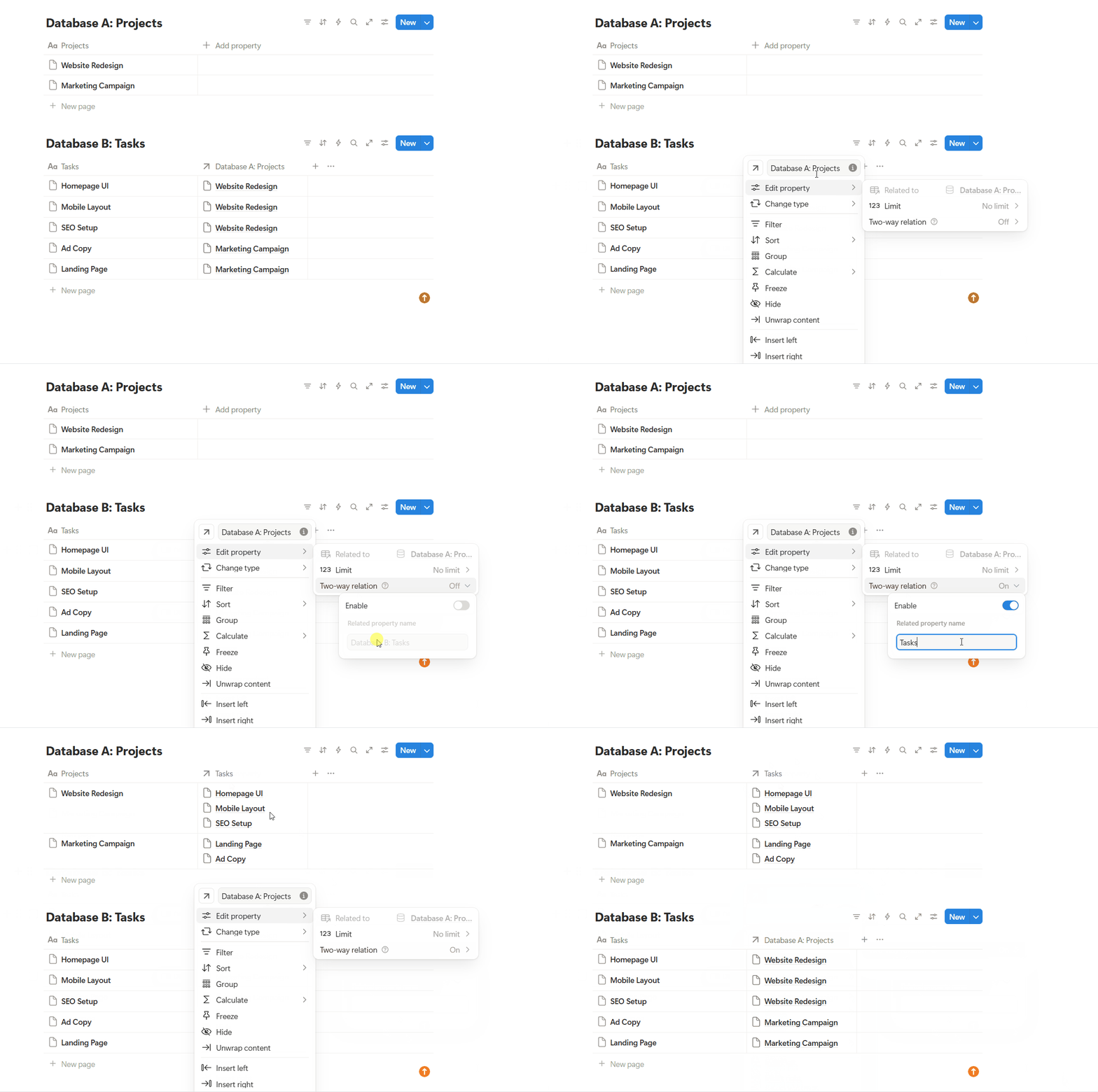
⚠️ Always select a page, don’t type text. Typing won’t create a real relation.
What Relations Allow You To Do
- See related items in both databases automatically
- Filter views by related items (e.g., show only Tasks for “Website Redesign”)
- Prepare for rollups, without a relation, rollups can’t work
What is a Rollup?
A Rollup summarizes or calculates data from a related database.
- It requires a relation first
- It can count items, sum numbers, calculate averages, or filter by a property
Step 1: Make sure a Relation exists
- Database A needs a relation property linking to Database B.
- Example:
- Database A =
Projects - Database B =
Tasks - Relation property =
Tasksin Projects orProjectin Tasks
This is the bridge that allows data to flow.
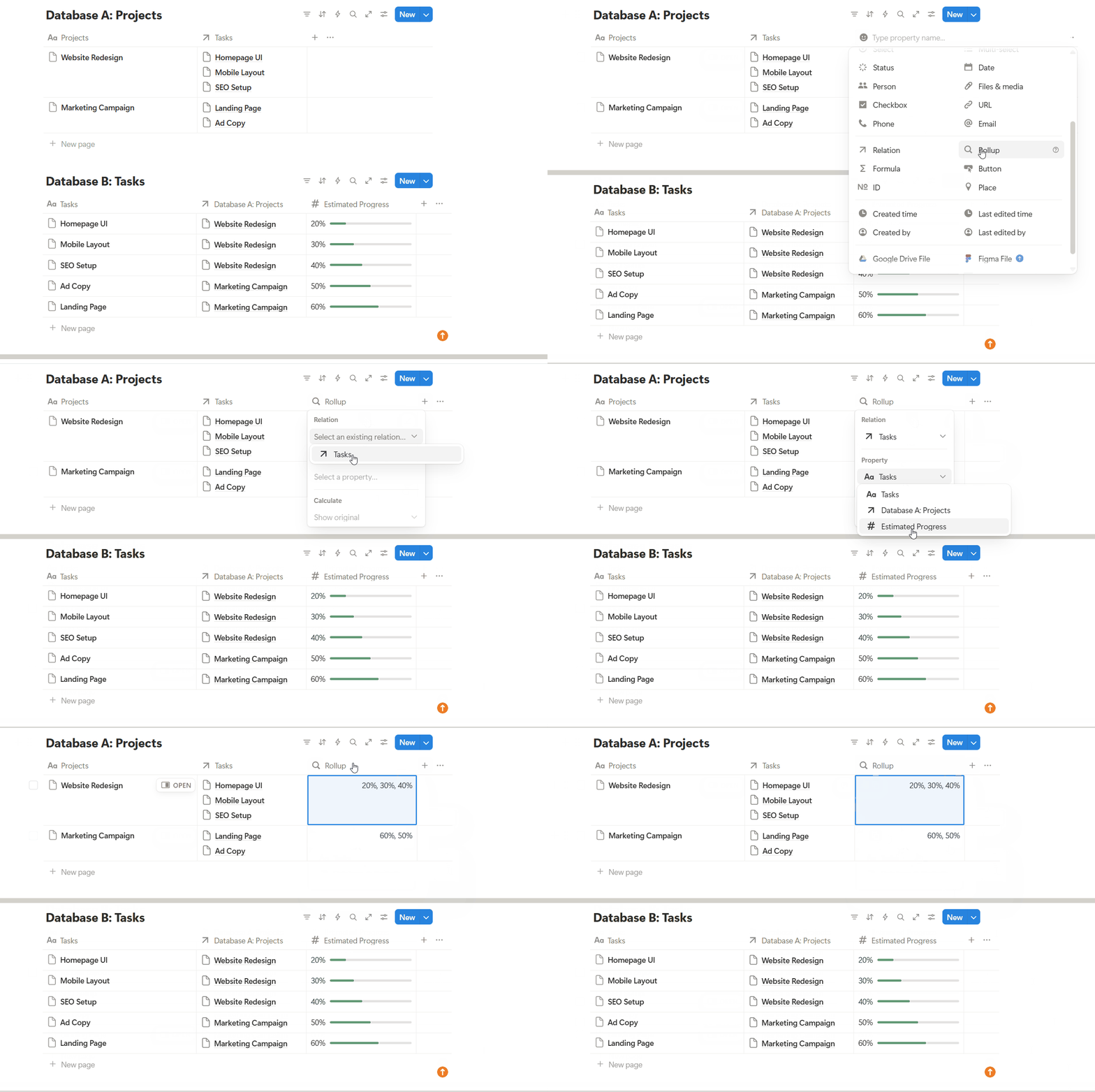
Step 2: Create the Rollup property in Database A
- In Database A, add a new property → Type = Rollup
- Select the Relation property (the one that links to Database B)
Step 3: Choose the property to display or summarize
- In the Rollup, select which property from Database B you want to see:
- Example:
Task Name,Status,Estimated Progress